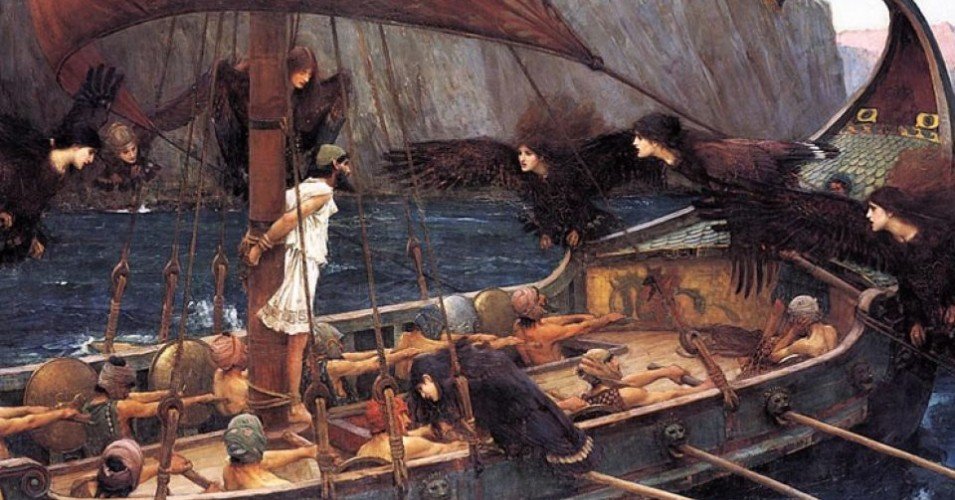
Laura this is a fantastically contextually relevant piece! I thoroughly enjoyed your personification of Mother Nature and the use of inclusive first person plural. The imagery of the horseman of the apocalypse is most apt for the pandemic we currently face. I was at first confused at your use of ‘finite’ in the final line, as to me the concept of beauty in nature has an enduring, transcendental quality, but that lead to the realisation you are highlighting the risk it faces from human beings. Nicely done. Restricted as we are, the Earth may prove to be cleaner for it than it has been for some time.
https://lauranash1.wordpress.com/2020/03/15/sydney/#more-344
Blog 2: The Siren’s Call
Can you write a poem along the lines of “The World is too much with us” that directly reflects your experience in the 21st century?
The world is too much with us; late and soon,
Day and night we drift; sailors without port,
Stranded in seas to defy even Neptune,
Wretched mires where frivolities cavort.
Siren songs call upon the seafarer,
Into the depths they willfully sink,
Clutching stones to drag the bearer,
Until at last they can no longer think.
Vision sacrificed for far sight,
Knowledge gained for impotence,
That no more does life excite,
For anything of substance.
But hark! See on high above,
The stars call a tune of their own,
A melody worthy of true love,
To vanquish the dull monotone.
So close fast your ears against the world,
That you may see with eyes unfettered
The temptations of the siren unfurled,
And from enticement be tethered.
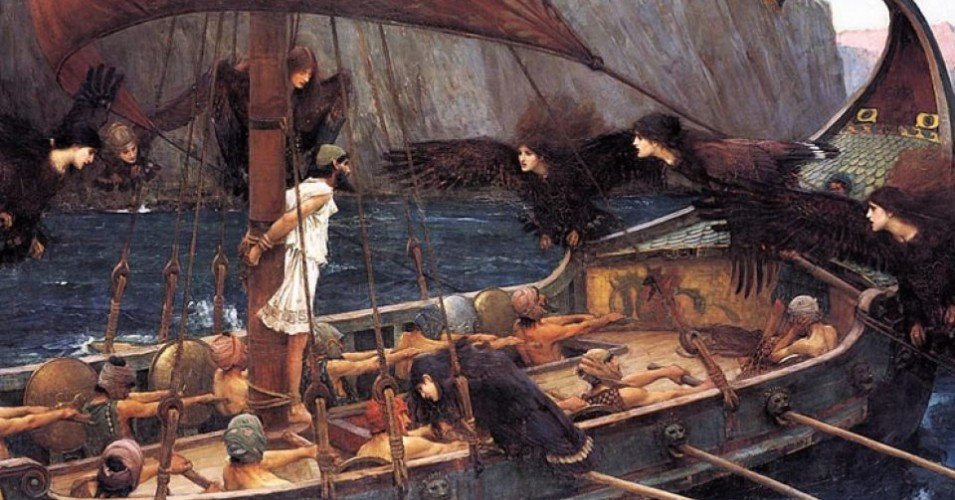
Within this piece I’ve attempted to metaphorically describe the enthralling influence phones and social media have on concentration and an ability to appreciate the world around us. There is so much low level ‘noise’ in play every hour of the day. In determining what to use as imagery within the poem I was inspired by Wordsworth on his invocation of the sea and heavens alongside figures of Greek Mythology. I’ve possessed a fascination with the Siren, of which the ‘call’ seemed a most appropriate metaphor for this poem. The journey of Odysseus and his men, who blocked their ears whilst he tethered himself to the mast, is a good lesson for us all. Limit your exposure or block it out altogether, lest you too be dragged down to the murky depths below.
Blog 1 – Pandaemonium
Are the concerns expressed in the film Pandaemonium still relevant in the 21st century?
Pandaemonium explores core components of human experience and identity that unquestionably resonate across time to the present day, some I’d argue even more so in the 21st Century than the 19th. Considerations of the role of government and the autonomy, the balance between the strict pursuit of worldly knowledge and an ability to appreciate at the world around us are vital contemporary interests.
The film touches upon the human desire for control and the dynamics of power, pitted against the equally human desire for freedom. Throughout all of human history we can observe the struggle between liberty and tyranny, equality and discrimination manifest itself in a multitude of forms. The plebeians of ancient Rome, the American and French revolutions, the oppressive influence of authoritarian governments this very day are all excellent examples. We are blessed to reside in one of the safest and most prosperous countries on the globe, but even an estimated 13% of Australians are below the international relative poverty line.
The distractions impeding one’s ability to connect with the world around us are far more pervasive and ingrained within our culture than the cold knowledge of books Dorothy Wordsworth spoke so scornfully of in Pandaemonium. The advent of the digital age has enabled the dissemination of knowledge on a monumental scale but that same burden of knowledge erects an intangible barrier upon our ability to process that information. Being so bombarded with targeted advertising, artificial standards of beauty and behaviour, an expectation to be always connected and available, consumerism and a twenty-four-hour news cycle can make mindfulness a hefty challenge. The urge to consume information takes many forms as I compose this blog, from the facedown phone that lies by the desk, the television blaring downstairs, the laptop in the room next to me. Being able to pause, release tension and take the time to simply be open to the world unfettered by man or his machines takes genuine effort. Wordsworth may be dismayed at this state of affairs were she alive to do, but she may take comfort in the continuing resonance of her words.
Whilst the specific contextual dynamics of 19th Century England may not be directly applicable to the present day, the underling conceptual concerns can unquestionably be traced to the 21st Century, and indeed may well still concern the 24th Century.
Header Image: Sobelle, Geoff. “Cinematic Dance Theatre.” .Geoffsobelle.com, Oct. 2016, images.squarespace-cdn.com/content/v1/53bd923fe4b03cf3057ae34e/1483467319332-Z6OJZM5AV09K2DUQH5VR/ke17ZwdGBToddI8pDm48kFmfxoboNKufWj-55Bgmc-J7gQa3H78H3Y0txjaiv_0fDoOvxcdMmMKkDsyUqMSsMWxHk725yiiHCCLfrh8O1z4YTzHvnKhyp6Da-NYroOW3ZGjoBKy3azqku80C789l0iXS6XmVv7bUJ418E8Yoc1hjuviiiZmrL38w1ymUdqq4JaGeFUxjM-HeS7Oc-SSFcg/CoPresenceMojave_L-7795.jpg.
Summative Entry
“Australia is not a finished product.”
I’ve had this notion as the header for my blogspace from its inception and it’s been slowly ticking around in my mind ever since. Examining all the blogs I’ve written in retrospect all of them in one manner or another relate to the notion of identity and the forms it takes in this country.
What I think I’ve come to appreciate especially in these later weeks is the power of language in forming that identity. Each experience necessitates its own unique brand of language to express it and thus having being able to explore so many forms of written expression about Australia and living in this country in the past 200 years (and the traditions that were here for thousands of years before that) it would be presumptuous, if not simply arrogant to claim that Australia has revealed all that it has to offer.
This process is in full display on my blog discussing the contest between Henry Lawson and Banjo Paterson in their visions of Australia, then in fervour surrounding the possibilities of Federation (https://adventuresinliterature.art.blog/2019/08/25/blog-2-the-bulletin-debate/). Lawson’s grim assessment of the harsh realities that the average Australian experienced were a far cry from Paterson’s visionary myth building. When two eloquent individuals writing in the same period in the same place, often published in the same outlet, produce such marked contrasts one cannot help but consider how many possibilities and insights lie for us to discover.
This trend continued into my next piece, a poem inspired by Tom Roberts’ painting Bailed Up, which I encountered during our excursion to the Art Gallery of New South Wales (https://adventuresinliterature.art.blog/2019/08/31/blog-3-bailed-up/). To cite my own explanation of this work, I wanted to expose a distinctive Australian trait; the carefree, she’ll be right attitude that can be applied to any pressure inducing situation. In a growing national fervor pushing for federation this representation begins to make a lot of sense. I wanted to capture this in the poem with an initial expectation of great drama and tension which can then be shattered by the end of the poem, with the cadence and choice of words. Creating a dichotomy of experience within the one blog again really showcases the diversity of voices within the sphere of Australian Literature.
Coming into this final summative task, I felt a burning urge to continue writing building upon my final blog discussion on Magical Realism and the thorough enjoyment I developed for Dead Man’s Dance. Thus you will note the addition of a bonus blog piece beyond the requirements that hearkens back to my first piece in exploring the raw power of nature, providing a hint of the Indigenous voice that I was perhaps lacking within my blogosphere before this point ( https://wordpress.com/block-editor/post/adventuresinliterature.art.blog/138 )Australia is indeed not a finished product without their means of perceiving this land.
The blog I perhaps enjoyed composing most was the one directly based upon my own experience, a descriptive creative piece personifying perhaps the most fearsome storm that I’ve ever witnessed in person (https://adventuresinliterature.art.blog/2019/08/13/venturing-into-the-storm/). This is telling in that my own direct voice is the one to which I connect to most. Within each writer lies their own story and insights to share, with such a breadth of ideas to collaborate and fresh perspectives being added or indeed revalued, like that of our First Peoples. Australia is not a finished product, for its writers are yet to say all there is to say about us and what we see ourselves as being.
I thoroughly enjoyed this process of expression and being able to examine other’s methods as well, using them for insight and inspiration for my own understanding. They ended up featuring in several in person conversations as well. I look forward to repeating the experience in other units.
Blog #6 Fire
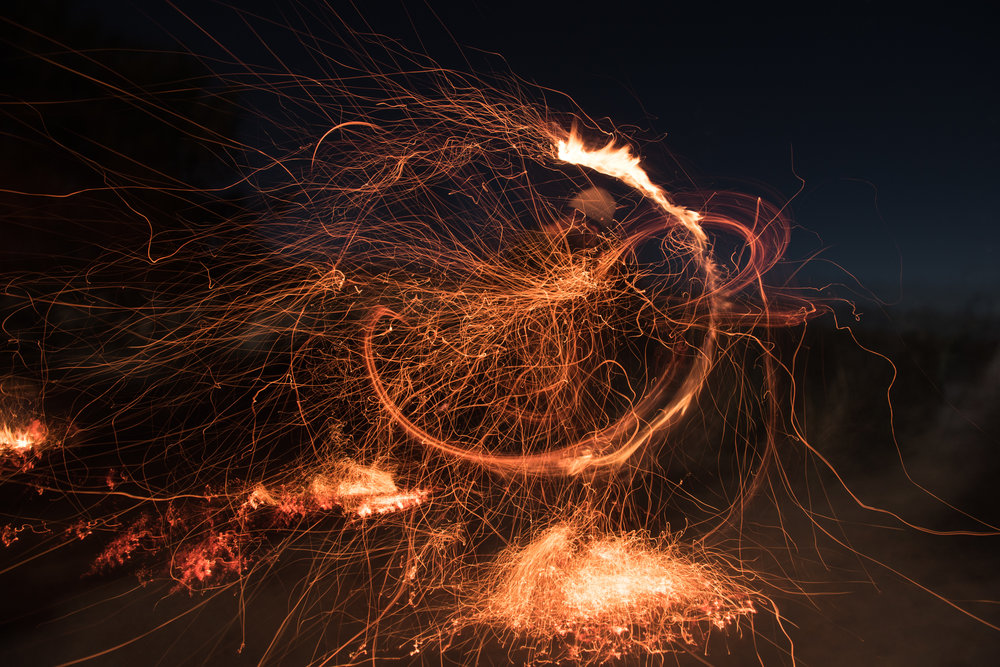
Whenever she had appeared before it was with a thunderous boom, streaking down from the heavens in grand fury to announce her arrival, or her father sternly sent her down by the mere force of his powerful gaze. She would dance and pirouette, darting from tree to tree as she reached out flickering hands to caress their forms, eagerly enveloping them to join the dance. Upon them she tattooed the mark her passing, oil glistening upon their forms as they bore resplendent crowns of red and yellow. They learned her song and bellowed it out, a roaring chorus in one voice. Whispering soft promises in their ears, she would take their unborn children and speak to them of stories, of all the places she had seen and the dances she’d had. Revel she would to the last breath, until partners she could find no more and the final spark of energy faded, then to lie upon the earth to slumber till next she was awakened.
Yet this next awakening was different. As she had laid down to rest, a new partner had come to join, gently scooping her into their arms, crooning to keep her feeble form awake. She scrabbled in their arms but their grip was firm and she chafed, gazing longingly as they passed prospective partners.
Then they sung, a song of their own making, a song of her. For all the endless stories she had told, none had yet to tell her one and this one was to meld with hers, their melodies weaving to form a new song. Night after night they would softly set her down and regale her with their stories, softly sending her to sleep with the promise of another tale tomorrow.
Then came the day when she was freed once more, brimming with newfound stories to share. Through the hills and across the valleys she ranged merrily, urging all the wildlife she encounters onwards, to meet with those that now guide her path, and take their own place in the song.
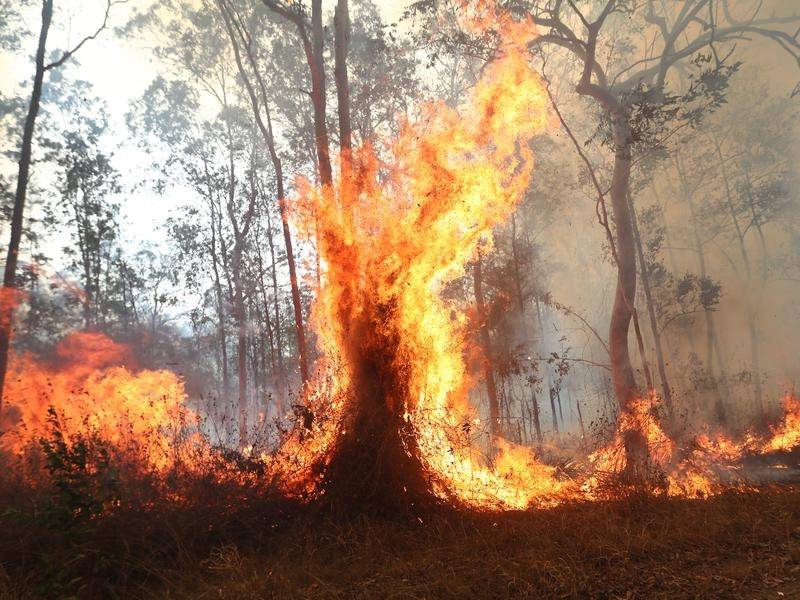
This bonus blog post is based around the idea of fire, and the uses that Indigenous Australians put it to and the way that the Australian ecosystem has adapted to this cycle of fire and rebirth. The blog was lacking in that voice, so I thought it appropriate to incorporate.
Peer Review #4 Cameron Cole
Cameron this is awesome! Coming over from ENGL102 this excites me greatly for what I may encounter next year. Utilising the disjointed presentation of the words themselves really builds this sense of displacement. The repetition and building questions really aid in giving it that segmented impression of time. I think we can all relate to those feelings and questions that you are exploring. A great little piece, thank you for sharing.
https://cameroncole.home.blog/2019/10/03/try-to-write-an-e-e-cummings-poem-using-your-own-subject-matter-but-sticking-to-his-language-and-form/comment-page-1/?unapproved=23&moderation-hash=4451450390df61136b04f784ef157b9d#comment-23
Blog #5: Magical Realism
Magical Realism is defined as the inclusion of magic or the supernatural within an otherwise realistic or grounded setting in a piece of literature. As an avid reader of the fantasy genre I find the concept fascinating. I’ve read two such works in the past month, That Dead Man Dance by Kim Scott and Flames by Robbie Arnott, both set in Australia and containing a powerful connection to the land.
The great Terry Pratchett himself declared in a very Pratchett way that describing something as Magical Realism is “like a polite way of saying that you write fantasy”. It calls into question how one might perceive a text such as Beowulf; many of the same principles apply. A conceptualisation of the world different to our contemporary western understanding. Is this ‘magical realism’? The tendency seems to be to classify it as mythology. Is it similar or disparate to the two texts I’ve consumed of late? I’m still pondering the question.
That Dead Man Dance was powerful. It begins to reveal to the reader insight to the manner in which a particular culture might view and understand the world. The experiences as they are described have internal consistency and adhere to an Aboriginal worldview, which has been dubbed Maban realism, a sub-genre of this concept. Flames, being set in a contemporary Tasmania, made the interesting choice of exploring connections to the land in the absence of an Indigenous population whilst still following elements of the way in which they perceive that land. It’s anthropomorphism of fire (unsurprisingly considering the title) is particularly marked in bridging that gap between our physical world and that spiritual dreaming and indeed simply making them one and the same. There is no disparity or disconnect in these texts. The spiritual seamlessly flows through the world and never does it feel unnatural. That isn’t easy to do and it has great implications for the reader:
It once again illustrates the power of language to convey meaning and broaden your understandings, to walk in another’s shoes and begin to see the world through their eyes, and it is a privilege to do so!
Peer Review #3 Natalia Ng
Natalia
I like to envision literature and art as sustenance for the soul. I highly resonate with your comment that it is as old as humankind itself. I think it, more so than almost anything else, differentiates us from the rest of creation. Our culture and society is so influenced by the works of those that have come before and those that work amongst us now, either reinforcing or challenging. I think it’s also key that you touch the dynamic between the authors intent and the readers understanding, two sides of that same kind.
Great summative piece, I couldn’t agree more!
Andrew
Blog #4 Dear Miss Slattery
3/Write a letter to Miss Slattery telling her what you think about the decision she made to leave Szabo.
Dear Miss Slattery
You said never believed intensely in the advantages of knowledge. It’s as though you’ve been cruising through life, a passive observer. I wonder if that opinion has changed with the realisation of your own self-worth. I think your decision to leave is all the significant for your acknowledgment that you did still harbour some love for him. Sacrificing that desire is no easy feat and shouldn’t be overlooked. Whilst perhaps your activities were rather risqué for my sensibilities in Apple’s bohemian party, I am happy for your rediscovered confidence and self-discovery. Where did you learn to crack the stock-whip so well? What made you decide to leave the sunburnt country and venture into the city? Do you ever miss it, or have you buried and pushed it behind you? Could there possibly be a return in your future? At the very least, I know that there is soul there for you, and your relationship here has been nothing if not soulless. Tibby I fear is responsible for most of that, in the most self-inflicted way. Such a caricature provokes some measure of pity in its own way as well. What soullessness he will endure to come if he cannot perceive the nature of his ways. He injures both himself and those he uses. Your parting has begun to trigger those thoughts potentially, he actively discourages that which he desires. An arrogance that had best be tempered.Whatever it is that you do choose to pursue, be safe in the knowledge that you pursue it freely.
It saddens me greatly that you discover the advantages of knowledge in this fashion, but I sincerely hope that it may furnish you for the future, that when you stare through that glass ceiling you do not just see your own reflection but can see beyond the glass to the other side and open them up that you yourself may pass through.
Best Regards,
Andrew
Peer Review #2 Emily Baker
An incredibly poignant piece Emily. The listing of those questions makes for an inordinately heavy burden; powerful, heartfelt expression.
I was quite tempted to compose an answer to that question with that very same artwork before I decided on something else. Coincidentally the history unit I am currently doing just had an entire week based upon him so I wanted possibly contribute some of the insights I’ve gleaned.
As the first European to sail and chart the eastern coast of Australia Cook was originally instructed to travel to Tahiti to observe the passing of Venus, with sealed orders to open upon arrival, which instructed him to afterwards chart the eastern coast of Terra Australis, the great unknown southern land. Amongst his instructions were the following:
“You are likewise to observe the Genius, Temper, Disposition and Number of the Natives, if there be any and endeavour by all proper means to cultivate a Friendship and Alliance with them, making them presents of such Trifles as they may Value inviting them to Traffick, and Shewing them every kind of Civility and Regard…
You are also with the Consent of the Natives to take Possession of Convenient Situations in the Country in the Name of the King of Great Britain: Or: if you find the Country uninhabited take Possession for his Majesty by setting up Proper Marks and Inscriptions, as first discoverers and possessors”
Whilst imperialistic, it doesn’t read as hostile. Australia was not initially viewed as a great verdant land of untapped riches, England wanted a penal colony in the wake of the loss of the Americas and the fear stemming from the French Revolution. Cook’s journal after this journey gives some great insights:
“From what I have said of the Natives of New Holland they may appear to some to be the most wretched people upon earth, but in reality they are far more happier than we Europeans; being wholy unacquainted not only with the superfluous but the necessary conveniences so much sought after in Europe, they are happy in not knowing the use of them. They live in a Tranquillity which is not disturb’d by the Inequality of the Condition”
I think he would have been indeed most saddened to know some of the fruits of his venture into the unknown. Personally I think to place upon him individually the burden of all that follows is a great weight. Cook was no soldier, he was a navigator and explorer. But as a broader historical figure people he represents more than that, he symbolises so many things and it is entirely unsurprising to see so many depictions of him, from the heroic to the demonic. There was a fantastic piece of commentary made by historian Graeme Davidson that is true of so many works in that ‘the stories they tell are determined more by the politics of the present than the ideals of the past’. And sometimes, we need those depictions.
I suspect I may have gotten a little carried in the length of this, but it is such a good discussion to have, especially with the significance of the 250th anniversary of his voyage next year. I hope it complements your work!
https://emsliterature.art.blog/2019/08/31/dear-mr-cook/
 Andrew Colman: Adventures in Literature